Cabinet hardware placement affects both the appearance and daily use of a kitchen, bathroom, laundry room, or built-in storage cabinet. A pull or knob that is installed too high, too low, or too close to the center of a door can make the cabinet harder to open and create an unbalanced look. A handle that is too small for a wide drawer may also feel awkward, especially when the drawer is heavy.
The good news is that most cabinet hardware placement follows a few simple rules. Cabinet doors usually place hardware near the opening edge, opposite the hinges. Drawers usually place pulls or knobs in the center, unless the drawer is very deep or very wide. Pull size should also match the width and weight of the drawer front.
This guide explains where to place cabinet handles, where to position drawer pulls, how to choose pull size, and how to mark cabinet hardware before drilling.
Knobs or Pulls: Which Hardware Layout Are You Using?
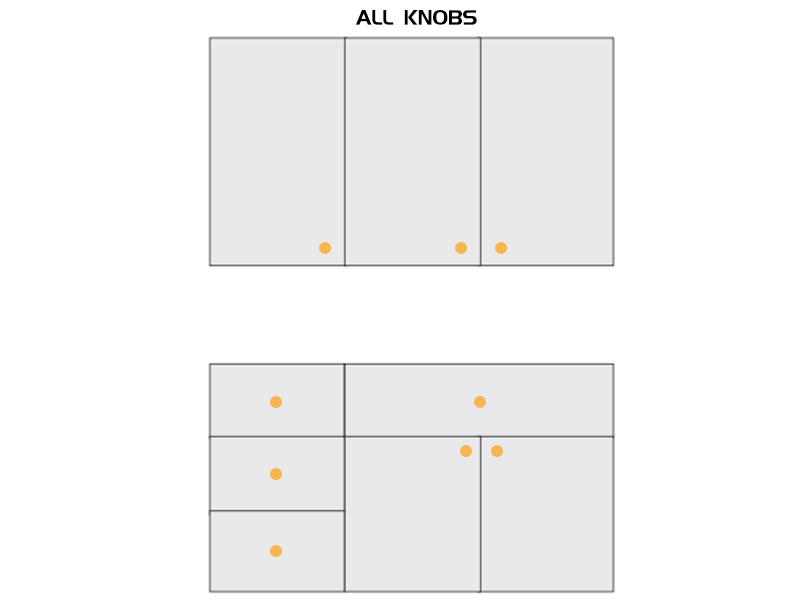
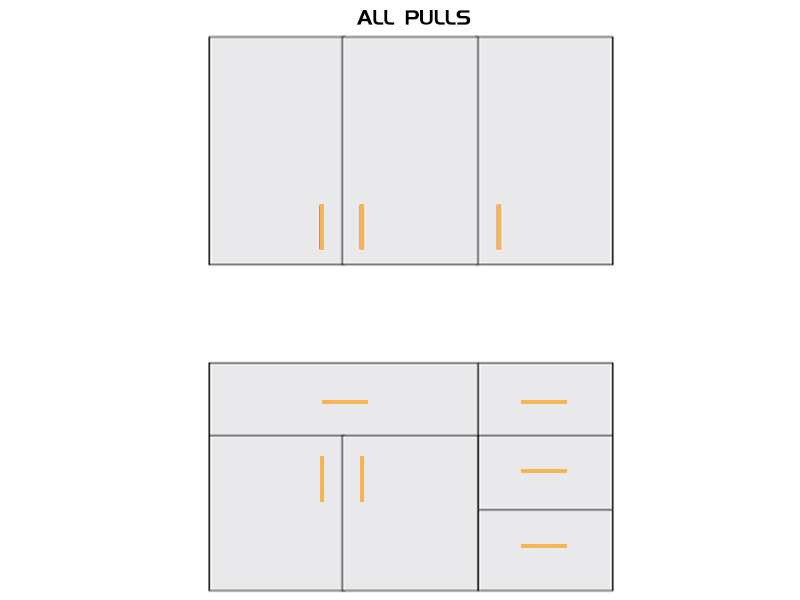
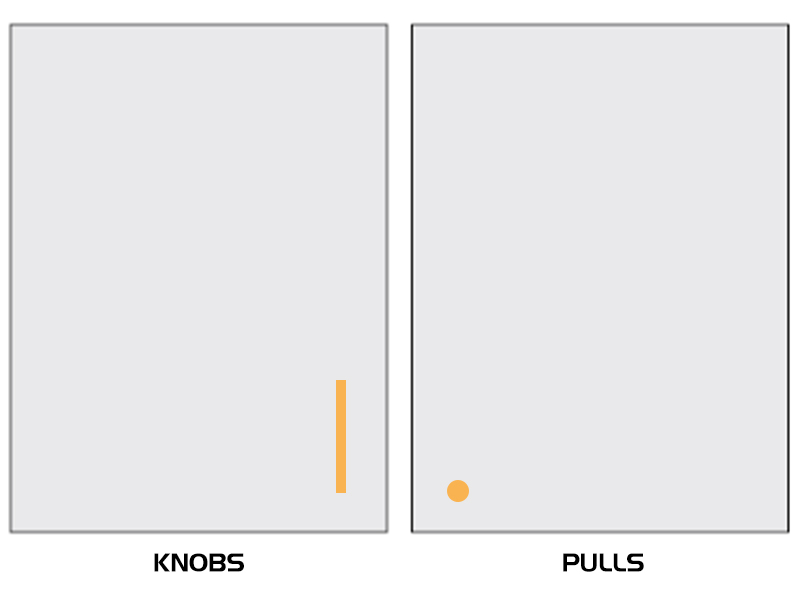
Before deciding where to place cabinet hardware, first decide whether you are using knobs or pulls. Each option follows a different placement pattern on cabinet doors and drawers. The diagrams below show the most common all-knob and all-pull layouts.
All Knobs Placement
Knobs are smaller and more subtle than pulls, making them a good choice for traditional cabinetry or designs where you want the cabinet style to stand out. In most layouts, knobs are placed near the opening corner of cabinet doors and centered on drawers.
All Pulls Placement
Pulls create a cleaner and more functional look, especially on modern cabinets and wider drawers. They are usually installed vertically on cabinet doors and horizontally on drawers, with placement kept consistent across the full cabinet layout.
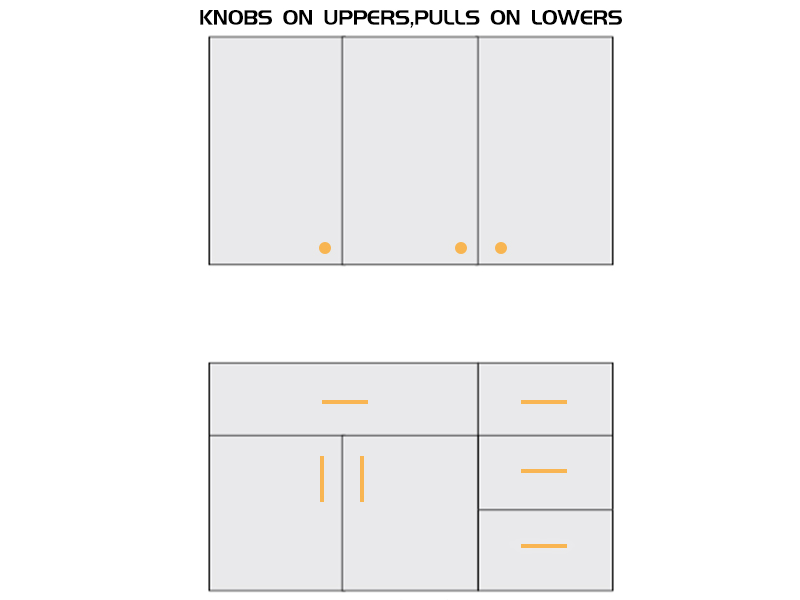
Knobs on Upper Cabinets, Pulls on Lower Cabinets
Another common cabinet hardware layout is to use knobs on upper cabinets and pulls on lower cabinets. Knobs keep the upper cabinet doors light and simple, while pulls provide a stronger grip for base cabinets, drawers, and heavier storage. In this layout, knobs are usually placed near the lower opening corner of upper doors, while pulls are installed vertically on lower doors and horizontally on drawers.
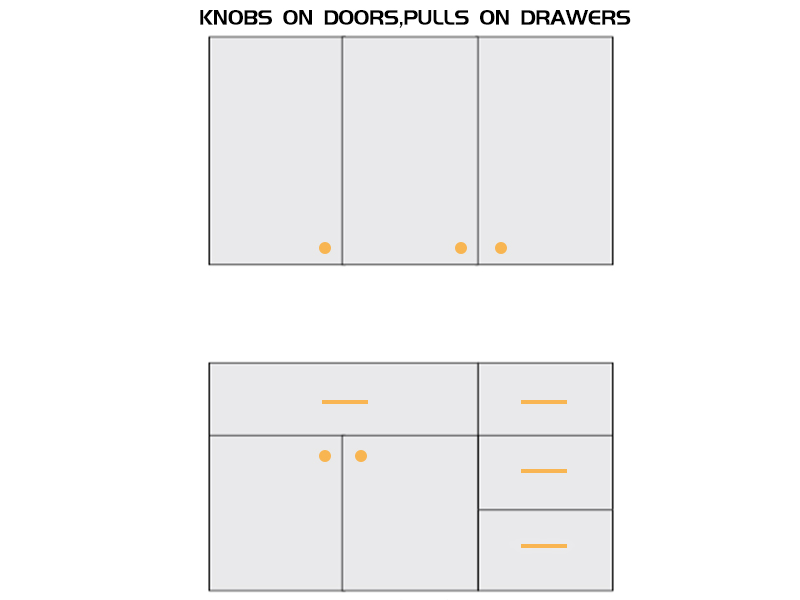
Knobs on Cabinet Doors, Pulls on Drawers
A popular cabinet hardware combination is to use knobs on cabinet doors and pulls on drawers. This layout creates a balanced look while keeping the cabinets easy to use. Knobs are usually placed near the opening corner of cabinet doors, while drawer pulls are typically installed horizontally in the center of the drawer front.
Stacked Cabinet Hardware Placement
Stacked cabinets use an extra row of upper cabinets, often reaching closer to the ceiling. For this layout, keep the hardware consistent with the rest of the cabinet design. Knobs or pulls are usually placed near the lower opening corner of each upper door, while the top row can use smaller or more subtle hardware to keep the design clean.
How to Choose the Right Knob and Pull Size
Choosing the right cabinet hardware size is just as important as choosing the right placement. Hardware that is too small can look weak on a large drawer, while oversized hardware can make a small cabinet door feel crowded. The best size depends on the width of the door or drawer, the weight of the cabinet front, and the overall cabinet style.
Cabinet Knob Size Guide
For most cabinet doors and small drawers, a 1.25-inch knob is a safe and balanced choice. It is large enough to grip comfortably, but not so large that it looks heavy on the cabinet front. If the drawer is wide or heavy, a pull is usually a better option than using an oversized knob.
Cabinet Pull Size Guide
Cabinet pulls are usually selected based on the width of the drawer or door front. Short pulls work well on small drawers and narrow cabinet doors, while longer pulls are better for wide drawers, pantry doors, and modern cabinet designs.
| Drawer or Door Width | Recommended Pull Size |
| Under 12 inches | 3-inch pull or small T-pull |
| 12–24 inches | 3–5 inch pull |
| 24–36 inches | 5–8 inch pull |
| 36 inches and above | 8–12 inch pull or two pulls |
| Tall pantry doors | 8 inches or longer |
For wide drawers, a pull that is about one-third of the drawer width usually creates a balanced look. For example, a 30-inch drawer can often work well with a pull around 10 inches long. This is not a strict rule, but it is a useful starting point when comparing different pull sizes.
One Long Pull or Two Smaller Pulls?
Wide drawers can use either one long pull or two smaller pulls. One long pull gives the cabinet a clean and modern look, especially on slab drawer fronts. Two pulls create a more traditional layout and can make a large drawer look more balanced.
If the drawer is very wide or heavy, avoid using one small pull in the center. It may look out of proportion and may not provide enough grip. In that case, choose a longer pull or place two pulls evenly across the drawer front.
Full-Length Pulls for Drawers
Full-length pulls are a good option for wide drawers, slab cabinet fronts, and modern kitchen designs. Instead of using a short pull in the center, the pull runs across most of the drawer width, creating a clean horizontal line and a stronger visual effect. For the best result, choose a pull that is slightly shorter than the drawer front and keep the spacing consistent on both sides.
Where to Place Knobs and Pulls on Doors and Drawers
The right cabinet hardware placement depends on the cabinet front style. Paneled doors and drawers have rails, stiles, and recessed panels, so the hardware should follow the cabinet frame. Slab doors and drawers have a flat surface, so the placement should focus on equal spacing and clean alignment.
Doors
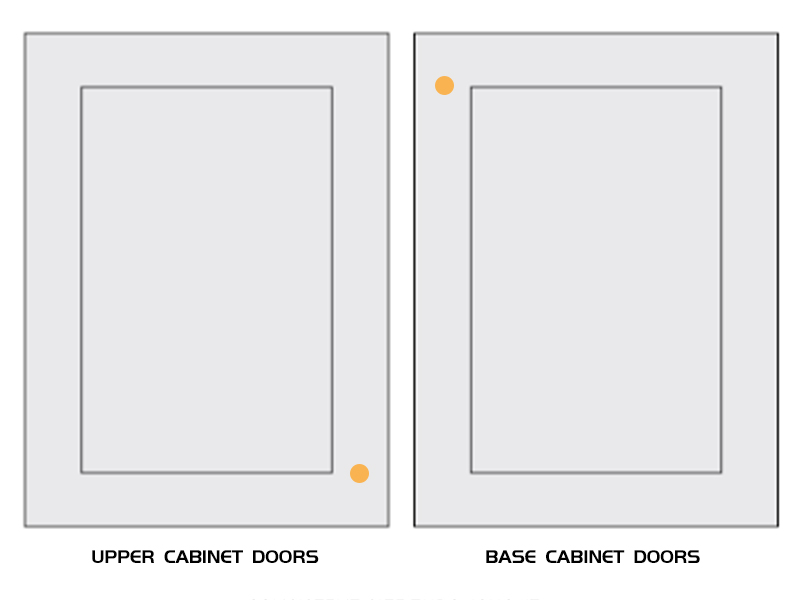
Paneled Doors
Knobs:
On paneled doors, knobs are usually placed on the stile, close to the corner where the rail and stile meet. For upper cabinet doors, place the knob near the lower opening corner. For base cabinet doors, place it near the upper opening corner.
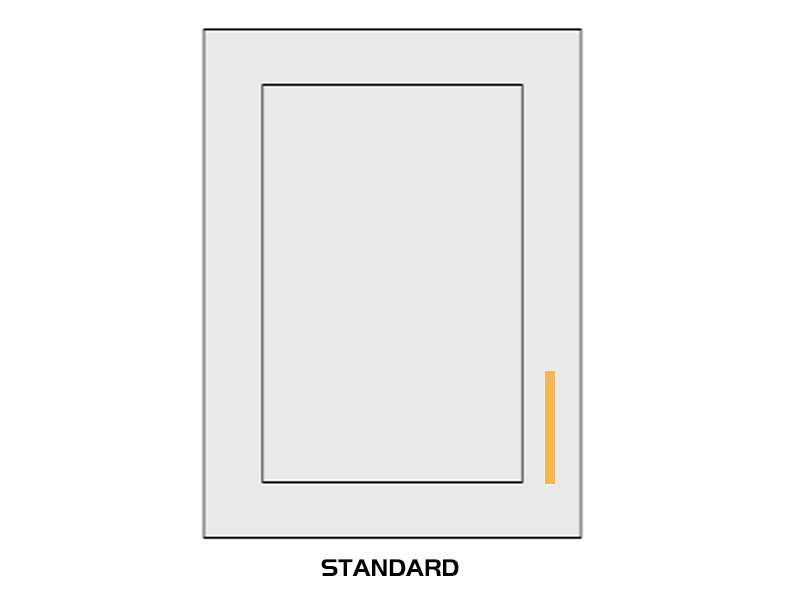
Pulls:
Pulls on paneled doors are usually installed vertically on the stile. The pull should align with the door frame and sit close to the opening edge, but not too close to the outer edge of the door.
Slab Doors
Knobs:
On slab doors, knobs are usually placed near the opening corner. Since slab doors do not have rails or stiles, keep the knob the same distance from the side edge and the top or bottom edge.
Pulls:
Pulls on slab doors are usually installed vertically. Keep the pull close to the opening edge and use the same spacing on every door to create a clean, consistent look.
Drawers
Paneled Drawers
Knobs:
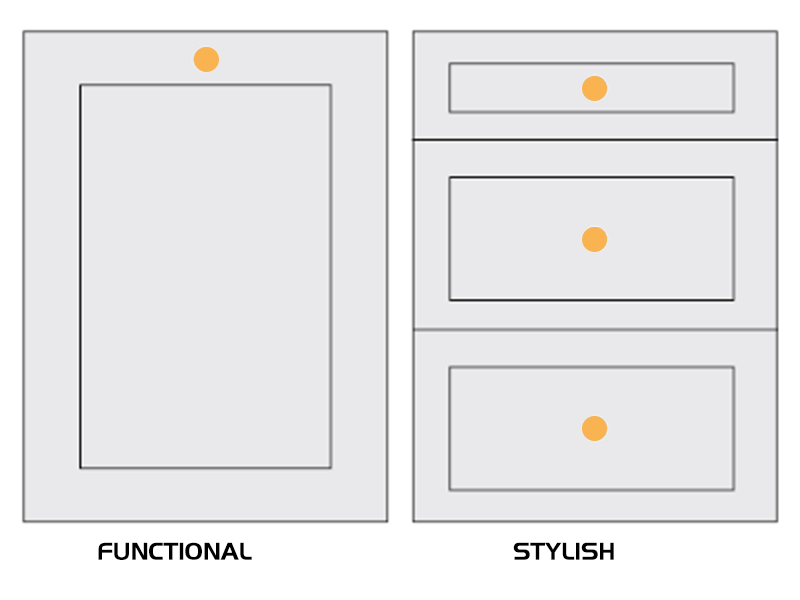
On paneled drawers, knobs are usually placed in the center of the recessed panel. This keeps the hardware balanced and prevents it from crowding the drawer frame.
Pulls:
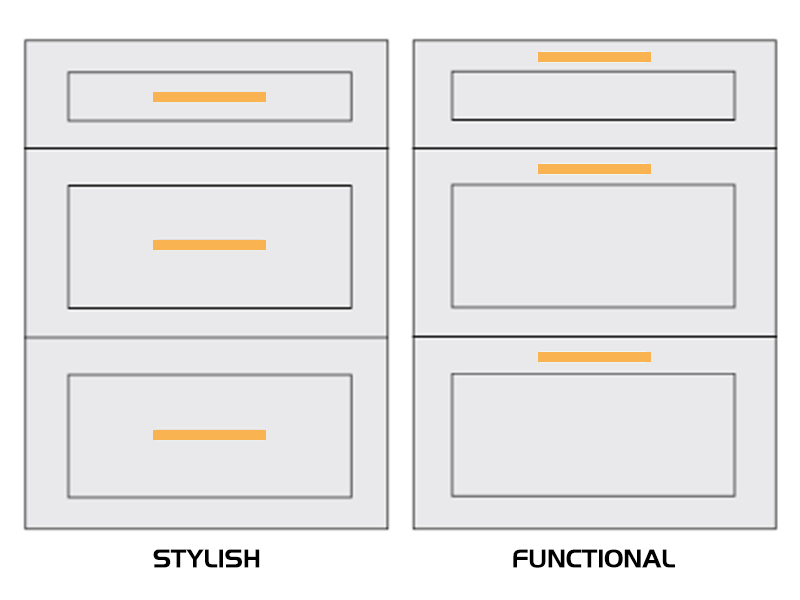
Pulls on paneled drawers are usually installed horizontally in the center of the recessed panel. For wider drawers, use a longer pull or two pulls placed evenly across the drawer front.
Slab Drawers
Knobs:
On slab drawers, knobs are usually centered on the drawer front. This works best for small or narrow drawers.
Pulls:
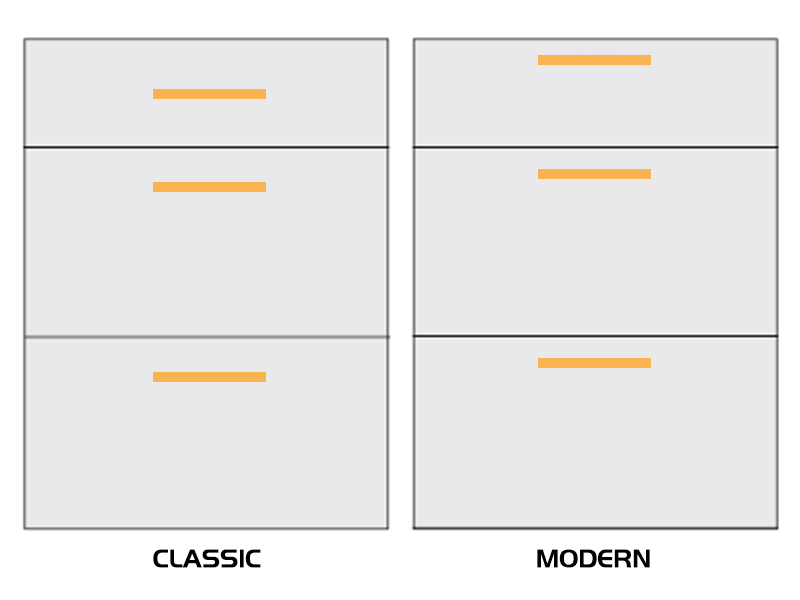
Pulls on slab drawers are usually installed horizontally and centered across the drawer front. For deep drawers, the pull can be placed slightly higher for easier access. For wide drawers, a longer pull or full-length pull usually looks more proportional.
Final Tips for Cabinet Hardware Placement
Cabinet hardware placement should balance function, proportion, and consistency. Most doors place hardware near the opening corner, while most drawers place pulls in the center. Deep drawers may work better with pulls placed slightly higher, and wide drawers usually need either a longer pull or two smaller pulls.
Before choosing the final position, check the cabinet style. Shaker and paneled cabinets should follow the rail and stile structure. Slab cabinets need clean and consistent edge spacing. Pull size should also match the drawer width so the hardware does not look too small or oversized.
The safest approach is to measure first, mark with tape, check the full cabinet layout, and drill only after confirming every position. With the right placement, cabinet pulls, knobs, and handles can make the cabinet easier to use while keeping the entire design clean and balanced.
Need Custom Cabinet Knobs or Pulls for Your Project?
Choosing the right cabinet hardware is not only about placement, but also about size, finish, material, and long-term durability. Honkingstar provides cabinet knobs, pulls, and handles for residential, commercial, and custom furniture projects. If you need cabinet hardware in specific sizes, finishes, or designs, contact Honkingstar today to discuss your requirements and send us an inquiry.